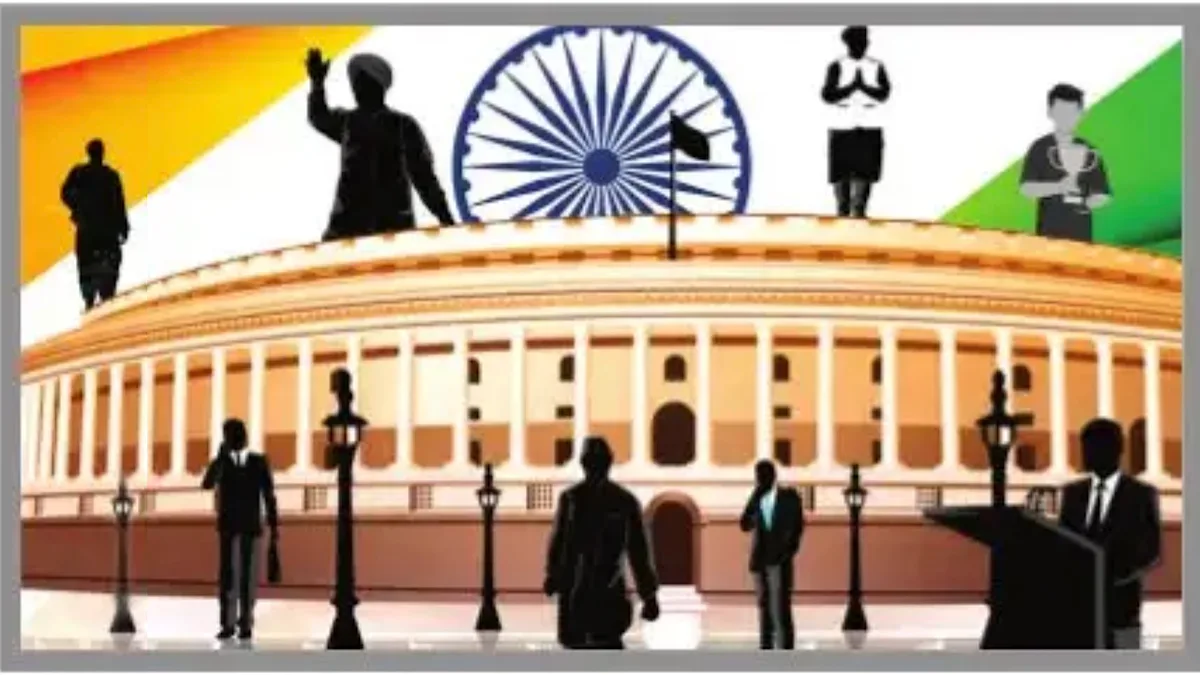
There was a time when politics occupied a defined place in human life. It was an important part of society, certainly, but it was only one among many concerns. Family, friendship, religion, art, literature, science, work, recreation, and personal aspirations all had their own spaces in the human experience. Politics influenced life, but it did not consume it. Today, however, many people feel that politics has escaped its traditional boundaries and expanded into almost every corner of existence.
Conversations at family gatherings, sporting events, entertainment programs, educational institutions, workplaces, social media platforms, and even personal relationships are increasingly viewed through a political lens. Everything appears to be political, and everyone seems expected to take a political position on everything. This raises a profound question: if politics becomes the measure of all things, whither our life? Where are we heading as individuals and as a society? The most visible driver of this transformation is the digital revolution.
Advertisement
Social media platforms have fundamentally altered the way human beings consume information. In earlier generations, people encountered politics at specific times through newspapers, radio broadcasts, or television news bulletins. Today politics arrives continuously, every hour of every day, through mobile phones that rarely leave our hands. The citizen has become both a consumer and a producer of political content. Every event, however trivial, can instantly become part of a larger political narrative. The consequence is that many people no longer experience events simply as events. A sporting victory is not merely a sporting victory; it becomes a political statement.
A film is not judged solely on artistic merit; it is evaluated according to ideological implications. A scientific discovery, a social trend, a cultural practice, or even a personal opinion often becomes the subject of political interpretation. The world is increasingly divided into competing camps, each eager to claim or condemn every development according to its own worldview. Such politicization carries certain advantages. Politics, at its best, encourages citizens to be aware of public affairs and to participate actively in shaping society.
It reminds people that social justice, governance, rights, and public welfare are not abstract concerns but matters that affect daily life. Political engagement can awaken people from indifference and encourage them to hold institutions accountable. Yet there is a difference between political awareness and political obsession. Awareness enriches life; obsession narrows it. When politics becomes the primary lens through which we view reality, we risk losing our ability to appreciate the complexity of human existence. We begin to classify people not as fellow human beings but as allies or opponents. Friendship becomes conditional upon ideological agreement.
Dialogue gives way to argument. Understanding yields to suspicion. One of the most unfortunate casualties of excessive politicization is the capacity for genuine conversation. In many societies today, disagreement is increasingly treated as hostility. People are less willing to listen and more eager to judge. Nuance becomes a victim of polarization. Every issue is forced into simplistic categories of right or wrong, friend or enemy, progressive or reactionary. The rich diversity of human thought is reduced to slogans and labels.
The impact on personal relationships can be equally damaging. Families that once found unity despite differences now experience divisions rooted in political loyalties. Lifelong friendships are strained by ideological conflicts. Individuals often feel compelled to conceal their opinions to avoid social isolation. In an environment where political identity dominates personal identity, the bonds that traditionally united communities begin to weaken. Another danger lies in the gradual erosion of inner life. Human beings require spaces that are free from constant ideological conflict.
Literature, music, spirituality, contemplation, and simple human companionship provide nourishment for the soul. These experiences remind us that life possesses dimensions that transcend political competition. When every aspect of existence is transformed into a battlefield of ideas, opportunities for reflection and inner growth diminish. History offers valuable lessons in this regard. The greatest civilizations flourished not merely because of political activity but because they cultivated philosophy, art, science, ethics, and spiritual wisdom.
The achievements of humanity emerged from a balanced engagement with life. Politics was important, but it did not eclipse all other pursuits. Societies that allowed politics to dominate every sphere often found themselves trapped in cycles of conflict and division. The challenge before modern humanity is therefore not to abandon politics but to restore it to its proper place. Citizens must remain informed and engaged, yet they must also preserve areas of life where human beings can meet as people rather than as political representatives. A neighbour should be more than a voter.
A friend should be more than an ideological ally. A family member should be more than a political opponent. We must recover the wisdom of seeing life in its fullness. Human beings laugh, love, create, dream, worship, learn, and suffer in ways that cannot be adequately explained by political categories alone. The beauty of a sunset, the comfort of friendship, the joy of a child’s laughter, the insights of literature, and the peace of silent reflection belong to a realm beyond political calculation. The question “Whither our life?” therefore deserves serious consideration.
If politics continues to expand without limit, we may become increasingly divided, anxious, and unable to recognize our common humanity. But if we learn to balance civic engagement with cultural, moral, intellectual, and spiritual pursuits, we can preserve the richness of human life. Politics is an important servant of society, but it becomes a dangerous master when it seeks to govern every thought, every conversation, and every relationship. The future of humanity depends not on eliminating politics from life but on ensuring that life remains larger than politics. Only then can we protect the dignity, freedom, and fullness of the human experience.
(The writer is a Thrissur-based accountant and freelance contributor.)